




Step 1: Clarify Core Usage Requirements (Ask Yourself These Questions First)
Load & Tonnage:
What weight do I need to lift or pull? This is the most critical parameter. Determine the Rated Load, typically measured in tons (t) or kilonewtons (kN). (1 ton ≈ 10 kN).
Safety Margin: Always reserve extra capacity; never exceed the rated load. It is recommended to select a model with 20%-30% higher capacity than the actual maximum workload. For example, if you typically lift 5 tons, consider a winch rated for 6-7 tons.
Speed & Efficiency:
Do I have requirements for operational speed? Choose based on the nature of the work:
JK Type Electric Winch(High-Speed): Fast rope speed (approx. 20-35 m/min), suitable for frequent lifting/lowering and efficiency-focused applications, such as transporting mortar and construction materials at building sites.
JM Type Electric Winch(Low-Speed/Heavy-Duty): Slow rope speed (approx. 7-15 m/min), smooth operation, ideal for heavy-duty, low-speed scenarios like large equipment installation and precision positioning.
Rope Capacity:
How much wire rope length do I need? Check the drum's rope capacity (in meters) to ensure it meets your lifting height or pulling distance requirements. Note that the wire rope diameter must match the winch's specifications.
Duty Cycle:
How frequently will it be used? Is it for occasional use or daily frequent start-stop, continuous operation?
Occasional use: A standard motor is sufficient.
Frequent start-stop, heavy-duty startups: Opt for a hoist-specific motor (e.g., YZR series wound rotor motor), which is better suited for harsh working conditions.

Step 2: Determine Installation and Environmental Conditions
Power Supply:
What power source is available on-site? The most common is three-phase 380V/50Hz industrial power. Ensure the voltage and frequency match.
Installation Method:
Fixed Type: Permanently installed on a concrete foundation using anchor bolts.
Mobile Type: Is a wheeled base required for easy movement between different work sites?
Environmental Factors:
Is the working environment exposed to flammable, explosive gases, or dust? (e.g., underground coal mines, chemical plants)
Yes → Must select an explosion-proof electric winch.
Is the environment dusty, humid, or corrosive? Select products with corresponding protection ratings (IP codes).

Step 3: Focus on Key Safety and Performance Configurations
Brake:
Electromagnetic brakes are standard feature, automatically engaging during power outages. They are essential safety devices. Verify that their braking torque is sufficient.
Overload Protection:
Is the equipment equipped with overload protection devices (e.g., overcurrent relays)? These automatically cut off power during overloads, preventing equipment damage and accidents.
Limit Switch:
Is an upper/lower limit switch needed? It automatically stops the hook at extreme positions, preventing "over-hoisting" and rope disorder.
Control System:
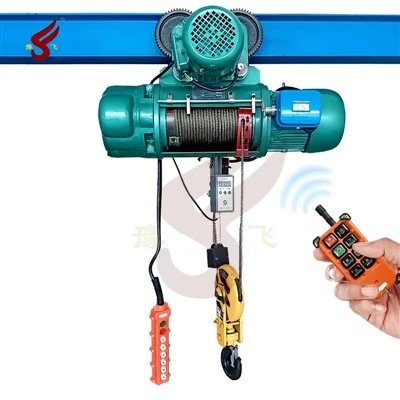
Control Method: Is it manual operation nearby, or is remote control (wired/wireless) required to enhance operational visibility and safety?
Speed Control Needs: Is stepless speed regulation required? For precise control, choose models equipped with a frequency converter (VFD).