


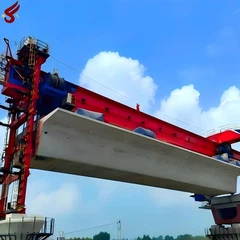
Every industrial procurement engineer and project contractor faces a critical decision when specifying outdoor heavy‑lifting equipment: should you select a box‑type double girder gantry crane or a truss double girder gantry crane? Both belong to MG‑series double‑girder gantry cranes, designed for heavy‑duty outdoor material handling, yet their main‑girder structural design creates major gaps in rigidity, wind‑load performance, maintenance workload and total‑cost‑of‑ownership.
Many buyers only compare initial purchase price while ignoring ISO working‑duty class, wheel‑load on foundation, deflection limits and long‑term inspection requirements. Wrong girder selection will lead to excessive vibration, frequent maintenance downtime or unsafe operation. This guide compares box girder vs truss double girder gantry crane from real‑world engineering practice, helping you make data‑driven RFQ preparation and equipment selection decisions for your project.
What is Box‑Type Double Girder Gantry Crane
The box‑type double girder gantry crane adopts closed box‑section main girders fabricated by thick steel‑plate automatic welding. The closed rectangular box‑structure delivers outstanding bending stiffness and torsional resistance, which is the mainstream heavy‑duty solution for high‑frequency continuous lifting operations.
Manufacturers conduct strict non‑destructive testing (NDT) for full‑penetration welds, supported by finite‑element‑analysis (FEA) calculation before production. This crane supports high ISO working‑duty classes ranging from A4 up to A7, covers lifting capacity from 20 tons to over 200 tons, and allows relatively long cantilever design. Its smooth outer surface simplifies blasting and anti‑corrosion painting work for coastal or corrosive working environments.
Drawbacks originate from its solid steel‑plate construction: higher self‑dead weight increases wheel load transferred to runway rails and concrete foundation, demanding stronger civil‑engineering investment. Larger windward area means higher wind overturning moment when deployed in high‑wind open‑air yards.
What is Truss Double Girder Gantry Crane
A truss double girder gantry crane, also known as lattice‑type double‑girder gantry crane, builds main girders with angle steel, channel steel or tubular profiles connected via gusset‑plate welding. Based on triangular force‑transfer principle, this open‑web lattice structure greatly cuts steel consumption and self‑weight compared with box‑type girders under equal span specifications.
Light dead‑weight reduces wheel load on track and foundation, making truss‑style design economically competitive for ultra‑long‑span projects above 40 m. Open‑web layout lets wind flow through the girder, delivering excellent wind‑resistance performance for windy coastal or high‑altitude sites. Truss double‑girder gantry cranes are commonly rated for ISO A3‑A5 duty classes, fit moderate‑load and intermittent‑cycle lifting assignments.
Major weak points come from massive weld joints and connection nodes. More inspection points are required for preventive maintenance; dust, moisture and rust easily accumulate inside truss gaps, increasing long‑term anti‑corrosion workload. Under heavy offset loads, larger deflection and structural vibration will occur compared with box‑type counterparts.
Core Technical Comparison Between Box‑Type and Truss Double Girder Gantry Crane
| Comparison Item | Box‑Type Double Girder Gantry Crane | Truss Double Girder Gantry Crane |
|---|---|---|
| Main Girder Structure | Closed solid box‑section, steel‑plate welded | Open‑web lattice truss, profile steel & gusset plates |
| Structural Rigidity & Deflection | High torsional‑bending rigidity, low deflection, stable trolley travelling | Moderate rigidity, larger deflection under heavy uneven load, noticeable vibration |
| ISO Working‑Duty Suitable Range | A4‑A7, continuous heavy‑duty operation | A3‑A5, intermittent or seasonal moderate‑load work |
| Self‑Weight & Wheel Load | Heavy dead‑weight; high wheel load, requires reinforced foundation | Light dead‑weight; lower wheel load, lower civil‑work requirement |
| Wind‑Load Coefficient | High windward area, higher overturning risk in strong wind | Low wind‑resistance coefficient, ideal for windy outdoor zones |
| Typical Span Scope | 10‑45 m | 30‑80 m ultra‑long‑span cost‑effective |
| Maintenance Workload | Low; smooth surface, easy anti‑corrosion, fewer critical weld‑check points | High; numerous nodes & welds; regular rust inspection required |
| Initial Procurement Cost | Higher steel consumption → higher upfront cost | Less steel used → lower initial investment |
| Cantilever Performance | Supports long heavy‑duty cantilevers | Limited cantilever length for heavy‑load tasks |
| Suitable Certification | CE, ISO9001 for heavy industrial projects | CE, ISO9001 for long‑span moderate‑load sites |
Key Advantages & Disadvantages of Each Gantry Crane Type
Box‑Type Double Girder Gantry Crane
Advantages
1. Superior structural rigidity, minimal vibration, precise load positioning for assembly work
2. Adaptable for high‑frequency heavy‑duty cycles up to ISO A6 / A7 class
3. Closed‑section girder resists dust and moisture; less long‑term maintenance burden
4. Reliable performance under offset eccentric loads; stable trolley movement
5. Permits long cantilever extension for yard material handling
Disadvantages
1. Heavier self‑weight raises requirements for runway rail and concrete foundation
2. Larger wind‑receiving surface, needs enhanced wind‑proof anchoring in windy locations
3. Higher initial purchase price because of thick steel‑plate material and complex welding inspection process
Truss Double Girder Gantry Crane
Advantages
1. Light‑weight lattice structure saves steel material; competitive cost for ultra‑long‑span projects
2. Excellent wind‑resistance, perfect for coastal, plateau and open‑air windy construction yards
3. Reduced wheel load can save civil‑engineering foundation investment
4. Convenient segmented transport and field assembly for remote temporary construction sites
Disadvantages
1. Lower rigidity leads to obvious sway and deflection under heavy or eccentric lifting loads
2. Thousands of gusset‑plate weld joints demand periodic non‑destructive‑testing inspection
3. Open gaps trap dust and humidity; anti‑corrosion painting maintenance cycles become shorter
4. Not recommended for continuous heavy‑duty operation above ISO A6 duty class
 |
 |
Typical Application Scenarios for Box‑Type Double Girder Gantry Crane
The box‑type double girder gantry crane is prioritized when stability, precision and continuous heavy‑duty performance rank as top priorities:
1. Shipyard & heavy fabrication workshops: Lifting and positioning large ship sections, heavy steel structural components
2. Steel mill & metal stockyards: High‑frequency handling of steel coils, thick plates, castings and forgings
3. Heavy‑machinery assembly plant: Installation and turnover of large generators, press equipment, rolling‑mill parts
4. High‑duty precast concrete yards: Continuous batch lifting of heavy precast beam components
5. Port heavy‑cargo outdoor storage yard: Frequent heavy‑goods loading‑unloading with strict positioning requirement
Typical Application Scenarios for Truss Double Girder Gantry Crane
Select truss double girder gantry crane if you face ultra‑long span, windy environment, moderate‑load and intermittent operation needs:
1. Large open‑air precast yards with span exceeding 40 meters, medium lifting tonnage
2. Wind‑prone coastal regions, plateau construction sites exposed to strong seasonal wind
3. Temporary EPC construction projects that need segmented transport, on‑site assembling and potential later relocation
4. Raw‑material stockyards: aggregate yards, mineral yards with intermittent lifting cycles
5. Projects where existing foundation cannot sustain high wheel‑load from heavy box‑type gantry cranes
Practical Buyer Selection Checklist before RFQ
Answer these engineering questions to filter between box‑type and truss double girder gantry crane before sending inquiry to manufacturers:
1. What is your rated lifting capacity, maximum working span and cantilever length?
2. What ISO working‑duty class do your real lifting cycles require? (A3‑A7)
3. Continuous‑duty or intermittent seasonal operation? Daily working hours?
4. Site environment: coastal salt corrosion, frequent strong wind?
5. Existing concrete foundation and runway rail maximum allowable wheel load?
6. Requirement for load positioning precision during assembly work?
7. Available local maintenance manpower for periodic weld‑joint inspection?
8. Evaluate full‑lifecycle expense: not only initial equipment price, but civil‑work cost & future maintenance expense.
Total Cost of Ownership Considerations (Not Only Initial Price)
Many project stakeholders fall into the trap of choosing truss double girder gantry crane only for lower upfront price. You must evaluate total‑cost‑of‑ownership (TCO) across the whole service life.
Box‑type double‑girder gantry crane carries higher initial equipment price, yet delivers lower maintenance expense, less unplanned production‑stop risk and longer service life under heavy continuous duty. When your civil foundation can bear higher wheel‑load, extra capital investment pays off in long‑term heavy‑duty industrial scenarios.
Truss‑style double‑girder gantry crane saves steel cost at purchase phase, but you need to budget for regular weld‑joint inspection, repeated anti‑corrosion repainting. If deployed for heavy‑frequency operation beyond ISO A5, accelerated structural aging will create safety risk and raise repair expense.
FAQ
Q1: Can truss double girder gantry crane reach 100‑ton lifting capacity?
A: Technically feasible, yet rigidity will drop significantly. For capacity above 80 tons with frequent operation, industrial engineers normally recommend box‑type double‑girder gantry crane for operational safety.
Q2: Which one suits coastal salt‑fog environment?
A: Box‑type double‑girder gantry crane performs better, its closed girder reduces moisture accumulation. If you must choose truss‑type for long‑span windy coastal yard, specify enhanced multi‑layer anti‑corrosion coating and stricter periodic inspection schedule.
Q3: Can I upgrade working‑duty class after gantry crane delivery?
A: No. Working‑duty classification depends on original girder structural design, cannot be modified post‑manufacturing. Confirm duty‑class during design phase.
Conclusion
To summarize the box‑type vs truss double girder gantry crane comparison:
Choose box‑type double girder gantry crane: when you need heavy‑load, high‑frequency continuous production, precise positioning, low‑maintenance requirement, working‑duty ISO A6‑A7. Accept higher initial cost and heavier wheel‑load for foundation.
Choose truss double girder gantry crane: when your project features ultra‑long span, windy site condition, moderate‑load intermittent work, limited foundation wheel‑load capacity. Prepare sufficient resource for regular node‑weld inspection and anti‑corrosion maintenance.