


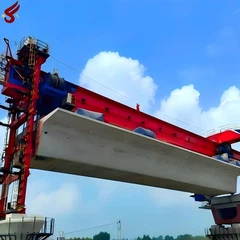
Hey there! As a supplier of Shipbuilding Gantry Cranes, I often get asked about the difference between shipbuilding gantry cranes and regular gantry cranes. So, I thought I'd write this blog to break it down for you in simple terms.
Basics of Gantry Cranes
First off, let's talk about what gantry cranes are in general. A gantry crane is a type of crane that's supported by gantry legs that run on rails or wheels. They're used to lift and move heavy loads in various industries, like construction, manufacturing, and shipping. People use them because they're super handy for moving big stuff around a work area.
Regular Gantry Cranes
Regular gantry cranes come in different shapes and sizes, and they're used for a wide range of applications. You've got the MH Type Electric Hoist Gantry Crane MH Type Electric Hoist Gantry Crane, which is often used in smaller workshops and warehouses. It's relatively lightweight and can handle loads that aren't too massive. These cranes are great for lifting and moving things like small machinery parts, boxes, and other medium - sized items.
Then there's the MZ Type Grab Bucket Gantry Crane MZ Type Grab Bucket Gantry Crane. This one is equipped with a grab bucket, which is perfect for handling bulk materials like sand, gravel, and coal. You'll often see these in ports or mining areas where they need to move large amounts of loose materials quickly.
Regular gantry cranes are usually designed for general - purpose use. They're built to be versatile and can be adjusted to fit different working environments. They're also more likely to be used in indoor settings or smaller outdoor areas where the loads aren't extremely heavy.
Shipbuilding Gantry Cranes
Now, let's dive into Shipbuilding Gantry Cranes Shipbuilding Gantry Crane. These are a whole different ballgame. Shipbuilding is a massive industry that involves working with extremely large and heavy components. Shipbuilding gantry cranes are specifically designed to handle the unique challenges of this industry.
Size and Capacity
One of the most obvious differences is their size and capacity. Shipbuilding gantry cranes are huge! They can have spans of over 100 meters and can lift loads of up to thousands of tons. In contrast, regular gantry cranes usually have much smaller spans and can handle loads in the range of a few tons to maybe a couple of hundred tons at most.
Structural Design
The structural design of shipbuilding gantry cranes is also much more robust. Since they need to lift such heavy loads, they're built with thicker steel and more complex support structures. The gantry legs are wider and stronger to distribute the weight evenly and ensure stability. Regular gantry cranes, on the other hand, don't need to be as heavy - duty because they're not dealing with the same level of stress.
Lifting Mechanisms
Shipbuilding gantry cranes often have more advanced lifting mechanisms. They may use multiple hoists or a combination of different lifting devices to handle large and irregularly shaped components. For example, when building a ship, you might need to lift a large hull section that's very long and heavy. The crane needs to be able to adjust the lifting points and the angle of the load to ensure a safe and stable lift. Regular gantry cranes usually have simpler lifting mechanisms that are sufficient for their intended use.
Working Environment
The working environment for shipbuilding gantry cranes is also different. They're typically used outdoors in large shipyards, where they're exposed to the elements. They need to be able to withstand harsh weather conditions like strong winds, rain, and saltwater corrosion. Regular gantry cranes may be used in more controlled environments, like indoor workshops, where they don't face these same challenges.
Precision and Control
Precision is crucial in shipbuilding. Shipbuilding gantry cranes are equipped with advanced control systems that allow for very precise positioning of the loads. When you're assembling a ship, every millimeter counts. The crane operators need to be able to move the components into place with extreme accuracy. Regular gantry cranes may not require the same level of precision, especially if they're used for more general - purpose tasks.
Why Choose a Shipbuilding Gantry Crane for Shipbuilding?
If you're in the shipbuilding industry, there's really no substitute for a shipbuilding gantry crane. The size, capacity, and specialized features of these cranes are essential for the efficient and safe construction of ships. Trying to use a regular gantry crane would be like using a small pickup truck to move a house. It just won't work.
Conclusion
So, in summary, the main differences between shipbuilding gantry cranes and regular gantry cranes come down to size, capacity, structural design, lifting mechanisms, working environment, and precision. Shipbuilding gantry cranes are built for the unique challenges of the shipbuilding industry, while regular gantry cranes are more versatile and suitable for general - purpose use.
If you're in the shipbuilding business and you're looking for a reliable and high - quality shipbuilding gantry crane, we're here to help. We've got the expertise and the experience to provide you with the perfect crane for your needs. Whether you're building small boats or large ocean - going vessels, we can offer a customized solution.


If you're interested in learning more about our Shipbuilding Gantry Cranes or have any questions about the difference between these cranes and regular ones, feel free to reach out. We'd love to have a chat and discuss how we can help you with your lifting requirements.
References
- Crane Industry Handbook: A comprehensive guide to different types of cranes and their applications.
- Shipbuilding Industry Reports: Data and insights on the requirements and challenges in shipbuilding, which help in understanding the design of shipbuilding gantry cranes.