




Hey there! As a supplier of port cranes, I often get asked about the range of movement of these powerful machines. It's a crucial aspect that can significantly impact the efficiency and productivity of port operations. So, let's dive right in and explore the ins and outs of a port crane's movement range.
First off, it's important to understand that there are different types of port cranes, each with its own unique range of movement. One of the most common types is the Ship-to-Shore Container Crane. These massive cranes are typically used to load and unload containers from ships at the quay. They have a wide range of movement both horizontally and vertically, allowing them to reach across the ship's deck and lift containers to different heights.
Horizontally, ship-to-shore container cranes can move along a rail system installed on the quay. This allows them to position themselves over the ship's holds and access different areas of the vessel. The movement along the rail is usually powered by electric motors, which provide smooth and precise control. Depending on the design and size of the crane, the horizontal movement range can vary from a few meters to several dozen meters.
Vertically, these cranes are equipped with a trolley that can move up and down along the crane's boom. The trolley is responsible for lifting and lowering the containers. The vertical movement range is determined by the height of the crane's boom and the capacity of the hoisting mechanism. Modern ship-to-shore container cranes can typically lift containers to heights of up to 40 meters or more, enabling them to handle large vessels and stack containers multiple layers high.
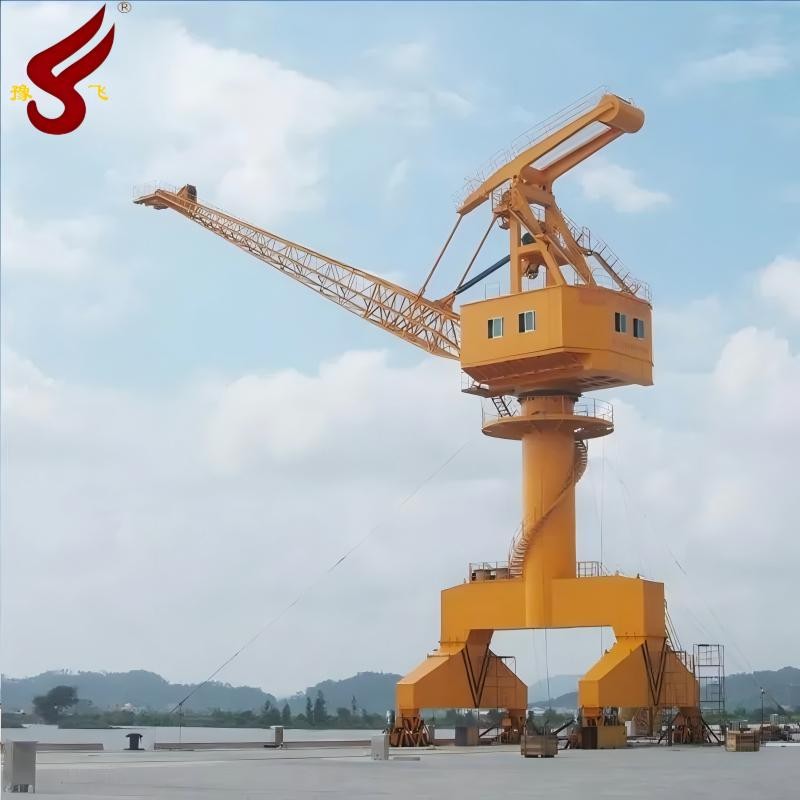
Another type of port crane is the Single Jib Portal Crane. These cranes are commonly used for general cargo handling in ports. They have a single jib that can rotate around a vertical axis, providing a wide range of horizontal movement. The jib can also be raised and lowered to adjust the height of the load.
The horizontal movement range of a single jib portal crane is mainly determined by the length of the jib and the rotation angle. The jib can typically rotate 360 degrees, allowing the crane to access different areas around it. The length of the jib can vary depending on the specific application and the size of the crane. Longer jibs provide a greater reach, but they also require more space and may have limitations in terms of lifting capacity.
Vertically, the movement range of a single jib portal crane is similar to that of a ship-to-shore container crane. The hoisting mechanism is used to lift and lower the load, and the height of the load is determined by the height of the jib and the capacity of the hoist.

In addition to these common types of port cranes, there is also the Floating Crane. As the name suggests, floating cranes are mounted on a floating platform, such as a barge or a ship. They are often used for heavy lifting operations in ports, such as loading and unloading large machinery, modules, or even entire ships.
The range of movement of a floating crane is different from that of land-based cranes. Since it is mounted on a floating platform, it has the ability to move freely on the water. This allows it to access areas that may be difficult or impossible to reach with land-based cranes. The horizontal movement range of a floating crane is mainly determined by the size and maneuverability of the floating platform. It can move forward, backward, sideways, and even rotate in place.
Vertically, the movement range of a floating crane is similar to that of other types of cranes. The hoisting mechanism is used to lift and lower the load, and the height of the load is determined by the height of the crane's boom and the capacity of the hoist.
Now that we've explored the different types of port cranes and their ranges of movement, let's talk about why this is important for port operations. The range of movement of a port crane directly affects its efficiency and productivity. A crane with a wider range of movement can cover a larger area and handle more cargo in a shorter amount of time. This can help to reduce the turnaround time of ships, increase the throughput of the port, and ultimately improve the overall competitiveness of the port.
In addition, the range of movement also affects the safety and reliability of the crane. A crane with a well-designed and properly maintained movement system is less likely to experience mechanical failures or accidents. It can also provide better control and precision when handling heavy loads, reducing the risk of damage to the cargo or the crane itself.
As a port crane supplier, we understand the importance of providing cranes with a wide range of movement and excellent performance. That's why we invest heavily in research and development to continuously improve the design and technology of our cranes. We work closely with our customers to understand their specific needs and requirements, and we offer customized solutions to meet their unique challenges.
If you're in the market for a port crane and want to learn more about the range of movement and other features of our products, we'd love to hear from you. Whether you need a ship-to-shore container crane, a single jib portal crane, or a floating crane, we have the expertise and experience to provide you with the right solution. Contact us today to start a conversation about your port crane needs and let's work together to find the best crane for your operation.
References
- Industry reports on port crane technology and design
- Technical specifications of various port crane models