


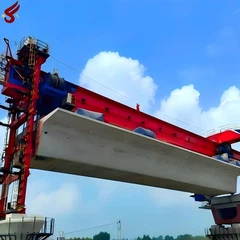
As a seasoned supplier of Shipbuilding Gantry Cranes, I've been involved in numerous discussions and projects that revolve around the capabilities of these remarkable pieces of heavy - duty equipment. One question that frequently arises is: "What is the maximum lifting capacity of a Shipbuilding Gantry Crane?"
Understanding Shipbuilding Gantry Cranes
Shipbuilding Gantry Cranes are specifically designed for the shipbuilding industry. They are large, robust structures that span over the shipbuilding area, allowing for the efficient movement and installation of heavy components such as ship sections, engines, and other large equipment. These cranes are typically mounted on rails, which provide stability and the ability to move along the length of the shipbuilding yard.
The design of Shipbuilding Gantry Cranes takes into account several factors, including the size and weight of the components to be lifted, the working environment, and the required lifting speed. Unlike other types of gantry cranes, such as the RTG Type Rubber Tyred Container Gantry Crane used in container terminals or the SDMQ Type Hydroelectric Power Station Gantry Crane for hydroelectric power stations, Shipbuilding Gantry Cranes need to handle extremely heavy and bulky loads.
Factors Affecting the Maximum Lifting Capacity
- Structural Design: The structure of the gantry crane is the primary determinant of its lifting capacity. The main beams, legs, and other load - bearing components must be designed to withstand the forces exerted during lifting operations. High - strength steel is commonly used in the construction of these components to ensure maximum strength and durability. The design also considers factors such as wind loads, seismic activity, and the dynamic forces generated during lifting and movement.
- Hoisting Mechanism: The hoisting mechanism, which includes the winch, wire ropes, and sheaves, plays a crucial role in determining the lifting capacity. A more powerful winch with a higher torque can lift heavier loads. Additionally, the quality and strength of the wire ropes are essential. Multiple wire ropes are often used in parallel to increase the overall lifting capacity and provide redundancy in case of a single rope failure.
- Foundation and Support: A stable foundation is necessary to support the weight of the crane and the load it is lifting. The foundation must be designed to distribute the loads evenly to the ground. In some cases, deep pile foundations may be required, especially in areas with soft soil conditions. The support structure, including the rails and the wheels, also needs to be able to handle the heavy loads without excessive deformation or failure.
Current Maximum Lifting Capacities in the Market
In the current market, Shipbuilding Gantry Cranes can have extremely high lifting capacities. Some of the largest Shipbuilding Gantry Cranes have a maximum lifting capacity of up to 2000 tons or more. These super - heavy - duty cranes are used in large - scale shipyards for the construction of large vessels such as oil tankers, container ships, and cruise liners.
For example, in some of the leading shipbuilding facilities in Asia, cranes with lifting capacities of 1600 - 2000 tons are not uncommon. These cranes are capable of lifting entire ship sections, which can weigh several hundred tons each. The high lifting capacity allows shipbuilders to assemble the vessels more efficiently, reducing the construction time and cost.
However, it's important to note that the maximum lifting capacity is not the only factor to consider. The working radius, lifting height, and the speed of operation also play significant roles in the overall efficiency of the crane. A crane with a very high lifting capacity but a limited working radius may not be suitable for all shipbuilding operations.
Custom - Built Shipbuilding Gantry Cranes
In many cases, Shipbuilding Gantry Cranes are custom - built to meet the specific requirements of a shipyard. Shipbuilders may have unique needs based on the types of vessels they are constructing, the layout of the shipyard, and the available budget. As a supplier, we work closely with our clients to design and build cranes that are tailored to their exact specifications.
For smaller shipyards or those with more specialized requirements, we also offer a range of cranes with lower lifting capacities, such as the MBH Type Electric Hoist Semi - Gantry Crane. These cranes are more compact and cost - effective, while still providing sufficient lifting capacity for the construction of smaller vessels or for handling lighter components.
Future Trends in Shipbuilding Gantry Crane Lifting Capacities
As the shipbuilding industry continues to evolve, there is a growing demand for even larger and more powerful Shipbuilding Gantry Cranes. The trend towards building larger vessels, such as ultra - large container ships and liquefied natural gas (LNG) carriers, requires cranes with higher lifting capacities.
In the future, we can expect to see the development of cranes with lifting capacities exceeding 2000 tons. This will be achieved through advancements in materials science, such as the use of new high - strength alloys, and improvements in crane design and engineering. Additionally, the integration of smart technologies, such as sensors and automation, will enhance the safety and efficiency of these cranes.


Importance of Choosing the Right Shipbuilding Gantry Crane
Selecting the right Shipbuilding Gantry Crane is crucial for the success of a shipyard. A crane with an insufficient lifting capacity can lead to delays in the construction process, as multiple lifts may be required to move a single heavy component. On the other hand, choosing a crane with an overly large lifting capacity can result in unnecessary costs, both in terms of the initial purchase price and the ongoing operating and maintenance expenses.
When choosing a Shipbuilding Gantry Crane, shipbuilders should consider factors such as the maximum weight of the components they need to lift, the working radius and height requirements, the frequency of use, and the available space in the shipyard. It's also important to work with a reputable supplier who has experience in designing and building Shipbuilding Gantry Cranes.
Conclusion
In conclusion, the maximum lifting capacity of a Shipbuilding Gantry Crane can vary significantly depending on various factors such as structural design, hoisting mechanism, and foundation. Currently, the market offers cranes with lifting capacities of up to 2000 tons or more, and future trends suggest that even higher capacities are possible.
As a supplier of Shipbuilding Gantry Cranes, we are committed to providing our clients with high - quality, reliable, and cost - effective solutions. Whether you are building large - scale vessels or smaller boats, we have the expertise and resources to design and build a crane that meets your specific needs.
If you are in the shipbuilding industry and are looking for a Shipbuilding Gantry Crane, we invite you to contact us for a detailed discussion. Our team of experts will be happy to assist you in selecting the right crane for your project and provide you with a competitive quote.
References
- Johnson, R. (2018). Heavy - Duty Crane Design and Engineering. Mechanical Engineering Press.
- Smith, A. (2020). Shipbuilding Technology and Equipment. Maritime Publishing.
- International Association of Shipbuilders. (2021). Guidelines for Shipbuilding Gantry Crane Selection.