


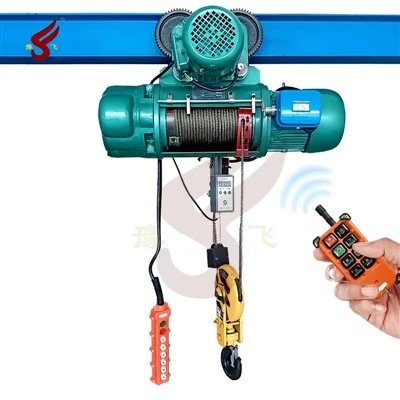


Hey there! As a supplier of electric hoists, I often get asked about the installation height requirements for these nifty machines. So, I thought I'd put together this blog post to give you the lowdown on everything you need to know.
First off, let's talk about why the installation height matters. The height at which you install your electric hoist can have a big impact on its performance, safety, and overall efficiency. If it's installed too low, you might run into issues with clearance, and if it's too high, it could be difficult to operate and maintain.
One of the main factors to consider when determining the installation height is the lifting capacity of the hoist. Different hoists have different weight limits, and you need to make sure that the height allows for safe and efficient lifting of the maximum load. For example, if you're using a hoist with a high lifting capacity, you'll need to install it at a height that gives you enough room to lift heavy objects without hitting anything.
Another important consideration is the working environment. If you're using the hoist in a factory or warehouse with low ceilings, you'll obviously need to install it at a lower height. On the other hand, if you have a large open space with high ceilings, you might be able to install it higher up. You also need to think about any obstacles or hazards in the area, such as pipes, beams, or other equipment. Make sure there's enough clearance around the hoist to prevent any accidents.
Let's take a look at some of the specific types of electric hoists we offer and their installation height requirements.
HB Type Explosion Proof Electric Hoist
The HB Type Explosion Proof Electric Hoist is designed for use in hazardous environments where there's a risk of explosion. When installing this type of hoist, you need to follow strict safety regulations. The installation height should be determined based on the specific requirements of the environment and the hoist's specifications. Generally, it should be installed at a height that allows for easy access for maintenance and inspection, while also keeping it away from any potential sources of ignition.
Metallurgical Electric Hoist
The Metallurgical Electric Hoist is used in the metallurgical industry for lifting and moving heavy metal products. These hoists are often installed in high-temperature environments, so the installation height needs to take into account factors like heat dissipation and protection from molten metal splashes. Usually, they are installed at a height that provides enough clearance for the movement of the hoist and the loads, and also allows for proper ventilation to keep the hoist cool.
CD1 MD1 Type Electric Hoist
The CD1 MD1 Type Electric Hoist is a popular choice for general lifting applications. For this type of hoist, the installation height can vary depending on the specific job requirements. In a typical workshop or warehouse setting, it's usually installed at a height that allows the operator to easily control the hoist and lift the loads to the desired height. A good rule of thumb is to install it at a height that gives you at least a few feet of clearance above the maximum lifting height of the load.
Now, let's get into some practical steps for determining the installation height.
Step 1: Measure the Space
Start by measuring the height of the area where you plan to install the hoist. This includes the ceiling height, as well as the height of any obstacles or equipment in the vicinity. You also need to measure the length and width of the space to make sure there's enough room for the hoist to move freely.
Step 2: Consider the Load
Think about the type and size of the loads you'll be lifting. If you're lifting long or bulky items, you'll need more clearance above the load to prevent it from hitting anything. Make a list of the maximum dimensions and weights of the loads, and use this information to determine the minimum installation height.
Step 3: Check the Hoist's Specifications
Look at the manufacturer's specifications for the hoist you've chosen. They should provide guidelines on the recommended installation height based on the hoist's lifting capacity, speed, and other features. Make sure you follow these guidelines to ensure the safe and proper operation of the hoist.
Step 4: Plan for Maintenance and Inspection
Don't forget to factor in the need for maintenance and inspection. You should be able to easily access the hoist for routine checks, lubrication, and repairs. This means installing it at a height that allows you to reach all the necessary components without having to use a ladder or other equipment that could be dangerous.


Step 5: Get Professional Advice
If you're still unsure about the installation height, it's always a good idea to consult with a professional. An experienced engineer or technician can help you determine the best height based on your specific needs and the requirements of the hoist. They can also make sure that the installation is done correctly and safely.
In conclusion, the installation height of an electric hoist is a crucial factor that can affect its performance, safety, and efficiency. By considering the lifting capacity, working environment, and following the steps outlined above, you can ensure that your hoist is installed at the right height.
If you're in the market for an electric hoist and have any questions about installation height or any other aspect of our products, don't hesitate to reach out. We're here to help you find the perfect hoist for your needs and ensure that it's installed and operating safely. Whether you're a small business owner or part of a large industrial operation, we've got the expertise and the products to meet your requirements. So, let's start a conversation and see how we can work together to get the job done right.
References
- Manufacturer's manuals for HB Type Explosion Proof Electric Hoist, Metallurgical Electric Hoist, and CD1 MD1 Type Electric Hoist.
- Industry standards and safety regulations for electric hoist installation.