


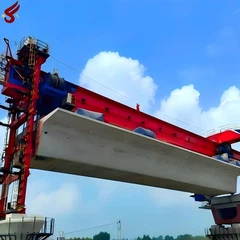
As a supplier of Shipbuilding Gantry Cranes, I've witnessed firsthand the critical role that limit switches play in these massive and complex machines. Shipbuilding gantry cranes are essential in the shipbuilding industry, used for lifting and moving heavy materials and components during the construction process. Limit switches, though often overlooked, are integral to the safe and efficient operation of these cranes.
1. Understanding Limit Switches in Shipbuilding Gantry Cranes
Limit switches are electromechanical devices that are used to control the movement of machinery by detecting the presence or absence of an object. In the context of a shipbuilding gantry crane, they are strategically placed at various points along the crane's travel path and lifting mechanisms. Their primary function is to monitor the position of different parts of the crane and send a signal to the control system when a predefined limit is reached.
2. Functions of Limit Switches
2.1. Over - Travel Protection
One of the most important functions of limit switches in a shipbuilding gantry crane is over - travel protection. Gantry cranes move along rails, and they have a specific range within which they can safely operate. Limit switches are installed at the end of the travel path to prevent the crane from moving beyond its intended limits. If the crane approaches the end of the rail, the limit switch will be triggered, sending a signal to the control system to stop the crane's movement. This prevents the crane from derailing or colliding with other structures, which could cause significant damage to the crane and the surrounding environment.
For example, if a shipbuilding gantry crane is moving along a long rail to transport a large ship hull section, the limit switches at the end of the rail ensure that the crane stops before it reaches the end. This is crucial because a derailed crane could lead to the loss of the valuable cargo and pose a serious safety risk to the workers on site.


2.2. Hoist Limit Control
The hoist mechanism of a shipbuilding gantry crane is responsible for lifting and lowering heavy loads. Limit switches are used to control the vertical movement of the hoist. There are usually two types of hoist limit switches: upper limit switches and lower limit switches.
The upper limit switch is installed at the highest point that the hoist can safely reach. When the hoist approaches this point, the limit switch is triggered, and the control system stops the hoist from rising further. This prevents the hoist from over - winding the cable or hitting the top of the crane structure, which could damage the hoist and the cable.
The lower limit switch, on the other hand, is installed at the lowest point of the hoist's travel. It ensures that the hoist does not lower the load too far, which could cause the load to hit the ground or other objects, potentially causing damage to the load and the hoist itself.
For instance, when lifting a heavy ship engine using the hoist of a shipbuilding gantry crane, the upper and lower limit switches ensure that the engine is lifted and lowered within a safe range. This not only protects the engine but also the hoist mechanism from excessive wear and tear.
2.3. Trolley Movement Control
The trolley of a shipbuilding gantry crane moves horizontally across the gantry beam. Similar to the crane's overall movement and the hoist mechanism, limit switches are used to control the trolley's movement. They are installed at the ends of the trolley's travel path on the gantry beam. When the trolley approaches the end of its travel, the limit switch is triggered, stopping the trolley's movement. This prevents the trolley from colliding with the end of the gantry beam or other components of the crane.
For example, if the trolley is moving to position a large ship panel for installation, the limit switches ensure that the trolley stops at the correct position and does not overshoot its target, which could lead to misalignment of the panel and potential installation problems.
2.4. Safety Interlocks
Limit switches also act as safety interlocks in a shipbuilding gantry crane. They are integrated into the crane's control system to ensure that certain conditions are met before the crane can operate. For example, some limit switches may be used to ensure that the doors of the operator's cabin are closed before the crane can start moving. This helps to prevent accidents caused by operators being ejected from the cabin during crane operation.
In addition, limit switches can be used to ensure that all the safety guards and covers are in place before the hoist or trolley can be operated. This helps to protect the workers from coming into contact with moving parts of the crane, reducing the risk of injuries.
3. Importance of Regular Maintenance and Inspection
Given the critical role that limit switches play in the safe operation of shipbuilding gantry cranes, regular maintenance and inspection are essential. Over time, limit switches can wear out or become damaged due to the harsh operating conditions in a shipyard. Dust, moisture, and vibrations can all affect the performance of the limit switches.
During maintenance, the limit switches should be checked for proper alignment, contact integrity, and electrical connections. Any signs of wear or damage should be addressed immediately. Faulty limit switches should be replaced promptly to ensure that the crane continues to operate safely.
4. Our Shipbuilding Gantry Crane Offerings
As a leading supplier of shipbuilding gantry cranes, we offer a wide range of high - quality cranes that are equipped with advanced limit switch systems. Our Shipbuilding Gantry Crane is designed to meet the specific needs of the shipbuilding industry. We also have other types of gantry cranes, such as the SDMQ Type Hydroelectric Power Station Gantry Crane and the MHB Type Single Girder Semi - Gantry Crane, which are suitable for different applications.
Our cranes are built with the latest technology and adhere to strict safety standards. The limit switch systems in our cranes are carefully designed and tested to ensure reliable performance. We understand the importance of safety in the shipbuilding industry, and we are committed to providing our customers with cranes that are not only efficient but also safe to operate.
5. Conclusion and Call to Action
In conclusion, limit switches are an indispensable part of shipbuilding gantry cranes. They provide crucial functions such as over - travel protection, hoist limit control, trolley movement control, and safety interlocks. By ensuring the proper functioning of these limit switches, we can prevent accidents, protect the equipment, and ensure the safety of the workers in the shipyard.
If you are in the shipbuilding industry or any other industry that requires heavy - duty lifting equipment, we invite you to contact us for more information about our shipbuilding gantry cranes. Our team of experts is ready to assist you in selecting the right crane for your specific needs. We can also provide you with detailed information about the limit switch systems and other safety features of our cranes. Let's work together to ensure the safe and efficient operation of your lifting operations.
References
- "Crane Safety Standards and Guidelines," International Organization for Standardization (ISO)
- "Shipbuilding Industry Best Practices for Crane Operation," Shipbuilders' Association of America