


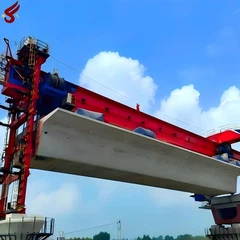
Evaluating the economic benefits of using a cantilever crane can be a game - changer for businesses in various industries. As a cantilever crane supplier, I've seen firsthand how these machines can transform operations and impact the bottom line. In this blog, I'll share some key factors to consider when assessing the economic advantages of using a cantilever crane.
1. Initial Investment
Let's start with the upfront cost. Buying a cantilever crane is a significant investment, but it's important to look at it as a long - term asset. There are different types of cantilever cranes available, each with its own price range. For instance, a Mobile Jib Crane offers flexibility, allowing you to move it around the workspace as needed. These are generally more expensive than fixed models because of the additional features and mobility.
On the other hand, a Wall Mounted Jib Crane is a great option if you have limited floor space. It attaches to the wall, which means you don't have to worry about taking up extra room on the ground. The installation cost for a wall - mounted crane can be lower compared to some other types, as there's no need for a large foundation.
A Fixed Column Jib Crane is a sturdy and reliable choice. It has a fixed column that provides excellent stability, making it suitable for heavy - duty lifting. The initial cost of a fixed column jib crane includes the price of the crane itself, installation, and any necessary permits.
When evaluating the initial investment, it's crucial to get quotes from different suppliers. You should also consider the quality of the crane. Cheaper options might seem appealing at first, but they could end up costing you more in the long run due to frequent breakdowns and maintenance.
2. Labor Savings
One of the biggest economic benefits of using a cantilever crane is the potential for labor savings. Manual lifting is not only time - consuming but also poses a risk of injury to workers. With a cantilever crane, you can lift and move heavy loads with ease.
For example, in a warehouse where workers used to manually carry boxes from one place to another, a cantilever crane can significantly speed up the process. Instead of multiple workers struggling to lift a heavy pallet, one worker can operate the crane to move it quickly. This means that you can either reduce the number of workers needed for the task or reallocate them to more value - added activities.
Over time, these labor savings can add up to a substantial amount of money. You'll have lower labor costs, and your workers can focus on tasks that require more skill and creativity, which can improve overall productivity.
3. Increased Productivity
Cantilever cranes can greatly enhance productivity. They can lift and position loads precisely, reducing the time it takes to complete a task. In a manufacturing setting, for instance, a crane can quickly move raw materials to the production line and finished products to the storage area.
The ability to work more efficiently also means that you can take on more orders. If you can produce and ship products faster, you can increase your market share and generate more revenue. Moreover, the precision of a cantilever crane can reduce the number of damaged products during handling. Fewer damaged products mean less waste and lower replacement costs.
4. Maintenance Costs
Like any piece of equipment, a cantilever crane requires regular maintenance. However, the maintenance costs can vary depending on the type of crane and how well it's maintained.
Regular inspections and preventive maintenance can help identify and fix small problems before they turn into major issues. For example, checking the cables, lubricating the moving parts, and inspecting the electrical components on a regular basis can extend the lifespan of the crane.
Some suppliers offer maintenance contracts, which can be a cost - effective option. With a maintenance contract, you'll have a team of experts who will take care of your crane, ensuring that it operates smoothly. This can save you money in the long run by preventing costly breakdowns and downtime.
5. Long - Term Durability
A well - built cantilever crane can last for many years. When you invest in a high - quality crane, you're getting a long - term asset. This means that you won't have to replace the crane frequently, which can save you a significant amount of money over time.
The durability of a crane also depends on how it's used and maintained. If you follow the manufacturer's guidelines for operation and maintenance, your crane can continue to perform well for decades. This long - term durability is an important economic factor to consider when evaluating the use of a cantilever crane.
6. Energy Efficiency
In today's world, energy efficiency is a major concern for businesses. Many modern cantilever cranes are designed to be energy - efficient. They use advanced motors and control systems that consume less power while still providing high - performance lifting.
Lower energy consumption means lower utility bills. Over the life of the crane, these energy savings can be quite substantial. Additionally, using an energy - efficient crane can also enhance your company's environmental image, which can be beneficial for marketing and customer relations.


7. Return on Investment (ROI)
Calculating the return on investment is a crucial step in evaluating the economic benefits of using a cantilever crane. To calculate the ROI, you need to consider the initial investment, labor savings, increased productivity, maintenance costs, and energy savings over a specific period.
The formula for ROI is:
ROI = (Net Profit / Cost of Investment) x 100
For example, if you invest $50,000 in a cantilever crane and over the next year, you save $20,000 in labor costs, increase your revenue by $30,000 due to increased productivity, and save $5,000 in energy costs, while spending $5,000 on maintenance, the net profit would be $20,000 + $30,000+ $5,000 - $5,000 - $50,000 = $0. In this case, the ROI would be 0%. However, as the crane continues to operate in subsequent years, the ROI is likely to increase.
If you're considering purchasing a cantilever crane for your business, it's essential to do a detailed ROI analysis. This will help you make an informed decision and understand the true economic benefits of the investment.
Conclusion
Evaluating the economic benefits of using a cantilever crane involves looking at multiple factors, including the initial investment, labor savings, productivity gains, maintenance costs, durability, energy efficiency, and return on investment. As a cantilever crane supplier, I understand that every business has unique needs, and choosing the right crane is crucial.
If you're interested in learning more about how a cantilever crane can benefit your business or want to discuss your specific requirements, feel free to reach out. We can have a detailed discussion about the best crane options for your operations and help you calculate the potential economic benefits. Let's work together to find the perfect solution for your lifting needs and boost your bottom line.
References
- Crane Manufacturers Association of America. "Best Practices for Crane Operation and Maintenance."
- OSHA Guidelines for Crane Safety and Usage.
- Industry reports on the economic impact of material handling equipment.