




Sensors play a crucial and multi - faceted role in port cranes. As a port crane supplier, I have witnessed firsthand how these tiny yet powerful devices have transformed the efficiency, safety, and performance of port cranes.
1. Safety Enhancement
One of the primary roles of sensors in port cranes is to ensure the safety of operations. In a busy port environment, there are numerous potential hazards, and sensors act as the vigilant eyes and ears of the crane system.
Load sensors are essential for preventing overloading. Every crane has a maximum load - bearing capacity, and exceeding this limit can lead to structural failure, endangering the lives of operators and causing significant damage to the crane and surrounding infrastructure. Load sensors are typically installed at key points on the crane, such as the hoisting mechanism. They continuously monitor the weight of the load being lifted. When the load approaches or reaches the maximum capacity, the sensor sends a signal to the control system, which can then trigger an alarm or even automatically stop the hoisting operation. For example, in our MQ Type Four - link Portal Crane, advanced load sensors are integrated to provide reliable load monitoring, giving operators and port managers peace of mind.
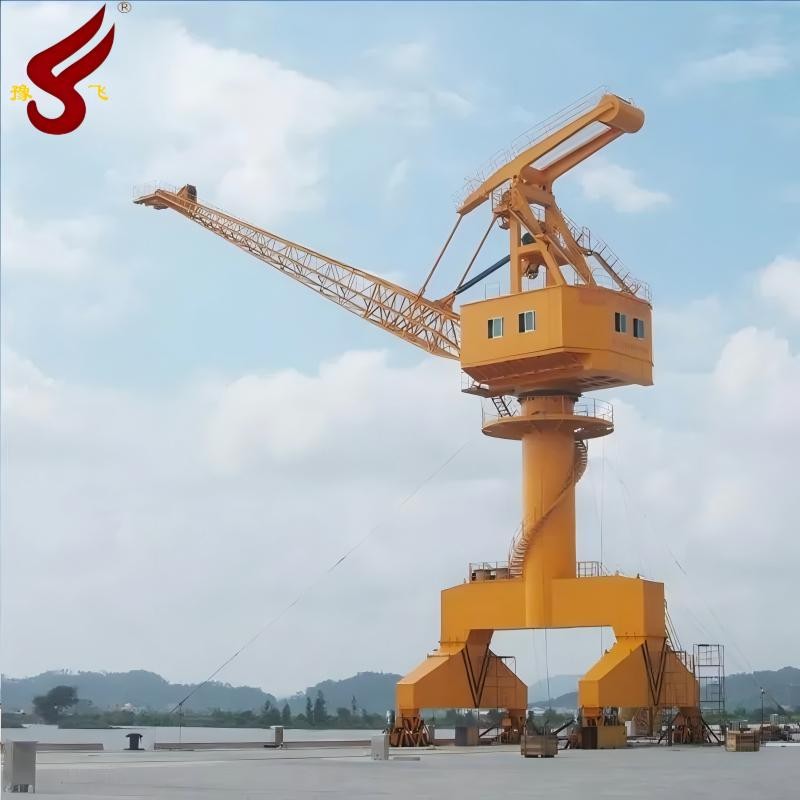
Proximity sensors are another crucial safety component. These sensors detect the presence of objects or people in the vicinity of the crane. In a port, there is a constant flow of personnel, vehicles, and other equipment. Proximity sensors can be installed on the moving parts of the crane, such as the jib and the trolley. If an object or a person gets too close, the sensor will send a signal, and the crane's control system can slow down or stop the movement to avoid collisions. This is especially important in a crowded port where the risk of accidents is high. Our Single Jib Portal Crane comes equipped with state - of - the - art proximity sensors to prevent such collisions and maintain a safe working environment.

2. Performance Optimization
Sensors also play a vital role in optimizing the performance of port cranes. They provide real - time data that can be used to improve the efficiency of crane operations.
Position sensors are used to precisely control the movement of the crane. For example, in the horizontal movement of the trolley on the crane's girder, position sensors can accurately determine the position of the trolley. This allows for precise positioning of the load, reducing the time required for loading and unloading operations. In the vertical movement of the hoist, position sensors ensure that the load is lifted and lowered to the exact height required. This level of precision is crucial in modern ports where time is of the essence, and any delay can result in significant economic losses. Our Continuous Ship Loader utilizes high - accuracy position sensors to achieve seamless and efficient loading operations.
Speed sensors are used to monitor and control the speed of the crane's moving parts. By adjusting the speed according to the load and the operating conditions, the crane can operate more efficiently. For example, when lifting a heavy load, the speed can be reduced to ensure stability, while for lighter loads, a higher speed can be used to increase productivity. Speed sensors also help in preventing sudden speed changes that can cause damage to the crane's mechanical components.
3. Condition Monitoring
Sensors are invaluable for condition monitoring of port cranes. They can detect early signs of wear and tear, mechanical failures, or other issues, allowing for timely maintenance and preventing costly breakdowns.
Temperature sensors are installed on critical components such as motors, gearboxes, and bearings. These components generate heat during operation, and abnormal temperature increases can indicate problems such as over - lubrication, excessive friction, or electrical faults. By continuously monitoring the temperature, maintenance personnel can be alerted when a component is operating outside of the normal temperature range. This allows for proactive maintenance, such as lubrication or replacement of worn - out parts, before a major breakdown occurs.
Vibration sensors are used to detect abnormal vibrations in the crane structure. Vibrations can be caused by a variety of factors, including misalignment of components, loose bolts, or mechanical failures. By analyzing the vibration patterns, engineers can identify the source of the problem and take corrective action. For example, if a vibration sensor detects excessive vibrations in the jib of a crane, it could indicate a problem with the jib's connection to the main structure, and immediate inspection and repair can be carried out.
4. Data Collection and Analysis
Sensors in port cranes collect a vast amount of data, which can be analyzed to gain valuable insights into the crane's operation and performance. This data - driven approach can lead to continuous improvement in crane design, operation, and maintenance.
The data collected by sensors can be used to analyze the usage patterns of the crane. For example, by analyzing the load data over a period of time, port managers can determine the typical load weights and frequencies, which can help in optimizing the crane's capacity planning. The position and speed data can be used to analyze the efficiency of the loading and unloading processes. This data can highlight areas where improvements can be made, such as reducing the distance traveled by the trolley or minimizing the time between consecutive lifts.
The data can also be used for predictive maintenance. By analyzing the sensor data from multiple cranes over time, algorithms can be developed to predict when a component is likely to fail. This allows for scheduled maintenance, which is more cost - effective than reactive maintenance. For example, if the temperature data from a bearing shows a gradual increase over a period of weeks, the maintenance team can plan to replace the bearing during a scheduled downtime, rather than waiting for it to fail unexpectedly.
5. Integration with Automation Systems
In modern ports, automation is becoming increasingly important, and sensors are the key enablers of this automation. Sensors provide the necessary data for the crane's control system to make intelligent decisions and operate autonomously.
For example, in an automated continuous ship - loading system, sensors are used to detect the position of the ship, the level of the cargo hold, and the type and quantity of the cargo. This data is then used by the control system to automatically adjust the position and movement of the crane's loading mechanism, ensuring efficient and accurate loading. Our Continuous Ship Loader is designed to be fully integrated with automation systems, thanks to its advanced sensor technology.
In conclusion, sensors are an indispensable part of modern port cranes. They enhance safety, optimize performance, enable condition monitoring, provide valuable data for analysis, and facilitate integration with automation systems. As a port crane supplier, we are committed to using the latest sensor technology in our cranes to provide our customers with the highest level of quality, safety, and efficiency. If you are in the market for port cranes and are interested in learning more about how our sensor - equipped cranes can meet your needs, we encourage you to contact us for a detailed discussion and potential procurement.
References
- “Port Crane Technology and Applications” by Maritime Engineering Press
- “Sensor Technology in Industrial Machinery” by Sensor Science Institute