


Hey there! I'm a supplier of KBK Light - duty Cranes, and today I wanna talk about something super important: the horizontal movement range of a KBK light - duty crane.
First off, let's understand what a KBK light - duty crane is. You can check out more details about it here: KBK Light - duty Crane. These cranes are really popular in many industries because they're flexible, easy to install, and can handle a variety of lifting tasks. They're often used in workshops, warehouses, and small - scale manufacturing plants.
Now, the horizontal movement range is a key factor when it comes to the functionality of a KBK light - duty crane. It determines how far the crane can move side - to - side, which is crucial for reaching different areas in a workspace.

The horizontal movement of a KBK light - duty crane mainly depends on a few things. One of the most important factors is the track system. The KBK crane runs on a track, and the length of this track sets the basic limit for its horizontal movement. For example, if you have a short track installed in a small workshop, the crane's horizontal movement range will be limited accordingly. On the other hand, if you install a long track that spans across a large warehouse, the crane can cover a much wider area.
Another factor that affects the horizontal movement range is the type of drive mechanism. There are usually two common types: manual and electric. In a manual - drive KBK light - duty crane, the operator has to physically push or pull the crane along the track. This means the movement is a bit more labor - intensive, and the range might be limited by the operator's strength and endurance. For instance, if the operator gets tired quickly, they won't be able to move the crane over a long distance.
In contrast, an electric - drive KBK light - duty crane offers a much wider horizontal movement range. The electric motor can power the crane to move smoothly and quickly along the track. It can cover longer distances without getting tired, just like a car can drive much farther than a person can walk. Electric - drive cranes are also more precise in terms of movement, which is great for tasks that require accurate positioning.
The load capacity of the crane also plays a role in its horizontal movement range. When the crane is carrying a heavy load, it might not be able to move as far or as fast as when it's empty. The extra weight puts more stress on the drive mechanism and the track, which can slow down the movement. So, if you need the crane to cover a large horizontal area while carrying heavy loads, you'll need to choose a crane with a higher load - capacity rating.
Let's take a look at some real - world examples. In a small auto - repair shop, a KBK light - duty crane with a relatively short track and a manual drive might be sufficient. The mechanics only need to move small engine parts around within a limited area, so a short horizontal movement range is okay. But in a large e - commerce warehouse where they need to move packages from one end of the building to the other, an electric - drive KBK light - duty crane with a long track is a must.
Now, you might be wondering how to calculate the horizontal movement range for your specific needs. Well, it's not that complicated. First, measure the length of the area where you want the crane to operate. This will give you an idea of the minimum track length you need. Then, consider the type of tasks you'll be doing. If you'll be moving heavy loads, make sure to choose a crane with the right load - capacity. And if you need precise movement, an electric - drive crane is probably the way to go.
It's also worth mentioning that there are some accessories that can expand the horizontal movement range of a KBK light - duty crane. For example, some cranes come with a telescopic boom. This boom can extend and retract, allowing the crane to reach further horizontally without having to move the entire crane along the track. It's like having an extra - long arm that can grab things from a distance.
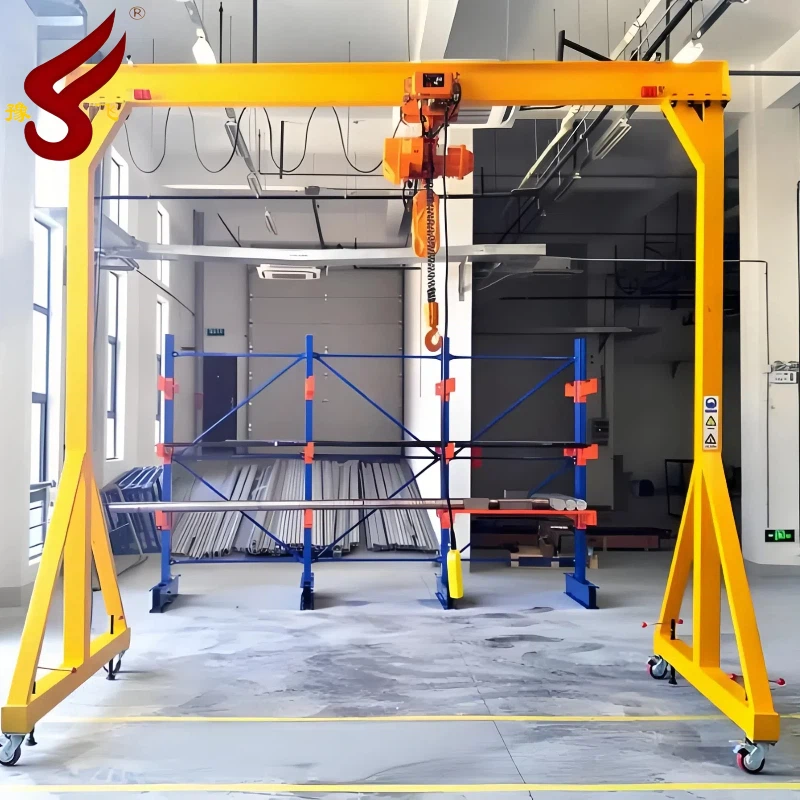
When comparing KBK light - duty cranes with other types of cranes, like the Light - duty Gantry Crane, the KBK crane has its own advantages in terms of horizontal movement. Gantry cranes usually move on wheels along the ground, and their movement is more restricted by the floor space and the layout of the area. KBK cranes, on the other hand, run on an overhead track, which gives them more flexibility in terms of horizontal movement, especially in areas with limited floor space.
In conclusion, the horizontal movement range of a KBK light - duty crane is influenced by multiple factors such as the track length, drive mechanism, load capacity, and the use of accessories. By carefully considering these factors, you can choose a crane that meets your specific horizontal - movement requirements.
If you're in the market for a KBK light - duty crane and want to discuss your needs in more detail, feel free to reach out. We can have a chat about the best crane options for your workspace and your budget. Whether you need a small - scale crane for a workshop or a large - scale one for a warehouse, we've got you covered.
References
- Crane Industry Handbook: Covers general knowledge about different types of cranes and their operational parameters.
- Manufacturer's Manuals: Provide detailed information about specific models of KBK light - duty cranes.