


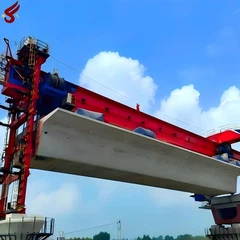
Hey there! As a supplier of Single Jib Portal Cranes, I often get asked about the various components and their functions on these cranes. One question that comes up quite frequently is about the anti - collision device. So, let's dive right in and talk about what the function of the anti - collision device on a single jib portal crane is.
First off, safety is the number one priority in any industrial operation, and that's especially true when it comes to cranes. Single jib portal cranes are used in a variety of settings, like ports, construction sites, and warehouses. In these places, there are often multiple cranes working in close proximity, or there could be other equipment, structures, or even personnel moving around. This is where the anti - collision device steps in.
The main function of the anti - collision device is to prevent collisions between the single jib portal crane and other objects. It does this by constantly monitoring the crane's position and the position of nearby objects. The device uses a combination of sensors, such as laser sensors, ultrasonic sensors, and radar sensors. These sensors are installed at strategic points on the crane, like the jib, the trolley, and the legs.
Let's take a closer look at how these sensors work. Laser sensors emit a laser beam and measure the time it takes for the beam to bounce back from an object. Based on this time measurement, the sensor can calculate the distance between the crane and the object. Ultrasonic sensors work in a similar way, but they use sound waves instead of laser beams. Radar sensors, on the other hand, use radio waves to detect objects and determine their distance and speed.
Once the sensors detect an object in the crane's path, the anti - collision device immediately sends a signal to the crane's control system. The control system then takes appropriate action, such as slowing down the crane, stopping it completely, or giving an audible or visual warning to the operator. This helps to avoid accidents and protect both the crane and the surrounding environment.
Another important function of the anti - collision device is to ensure the smooth operation of the crane. In a busy industrial environment, there are often tight schedules and deadlines to meet. If a crane collides with another object, it can cause significant damage to the crane and disrupt the workflow. The anti - collision device helps to prevent these disruptions by keeping the crane safe and allowing it to operate efficiently.
For example, in a port where multiple cranes are used to load and unload cargo, the anti - collision device ensures that the cranes can work in close proximity without colliding. This allows for a more efficient use of space and increases the overall productivity of the port. Similarly, in a construction site, the anti - collision device helps to prevent the crane from hitting other construction equipment or structures, which could cause delays and additional costs.
Now, let's talk about some of the features that make a good anti - collision device. A reliable anti - collision device should have high - precision sensors that can accurately detect objects at a long distance. It should also be able to work in different environmental conditions, such as rain, fog, or dust. Additionally, the device should be easy to install and maintain, and it should be compatible with the crane's existing control system.
At our company, we offer single jib portal cranes with state - of - the - art anti - collision devices. Our devices are designed to meet the highest safety standards and provide reliable performance. We understand that every customer's needs are different, so we can customize the anti - collision device according to your specific requirements.
If you're in the market for a single jib portal crane, you might also be interested in other types of port cranes. Check out our Stacker-Reclaimer, Grab Ship Unloader, and Floating Crane options. These cranes are also equipped with advanced safety features to ensure smooth and efficient operation.
In conclusion, the anti - collision device on a single jib portal crane is a crucial component that plays a vital role in ensuring safety and efficiency. It helps to prevent collisions, protect the crane and the surrounding environment, and keep the workflow running smoothly. If you're considering purchasing a single jib portal crane, make sure to choose one with a reliable anti - collision device.


If you have any questions or would like to discuss your crane requirements further, don't hesitate to reach out. We're here to help you find the perfect crane solution for your business.
References
- Crane Safety Handbook, Industrial Crane Manufacturers Association
- Safety Standards for Port Cranes, International Maritime Organization