


Hey there! As a supplier of light - duty cranes, I often get asked, "What is the definition of a light - duty crane?" Well, let's dive right in and break it down.
A light - duty crane is typically designed to handle relatively small loads compared to heavy - duty industrial cranes. In general, light - duty cranes are used in settings where the lifting requirements are not as extreme. These cranes are commonly found in workshops, small manufacturing plants, warehouses, and maintenance facilities.
One of the key factors that define a light - duty crane is its load - capacity. Usually, light - duty cranes can lift loads ranging from a few hundred pounds up to around 5 tons. This is in contrast to heavy - duty cranes that can handle loads of 50 tons or more. For example, in a small auto repair shop, a light - duty crane might be used to lift engines out of cars. The load in this case is relatively light, and a heavy - duty crane would be overkill.
Another important aspect is the crane's mobility and flexibility. Light - duty cranes are often more portable and easier to install and re - position than their heavy - duty counterparts. They can be moved around the workspace as needed, allowing for greater versatility. Some light - duty cranes are even designed to be mounted on walls or ceilings, saving floor space.
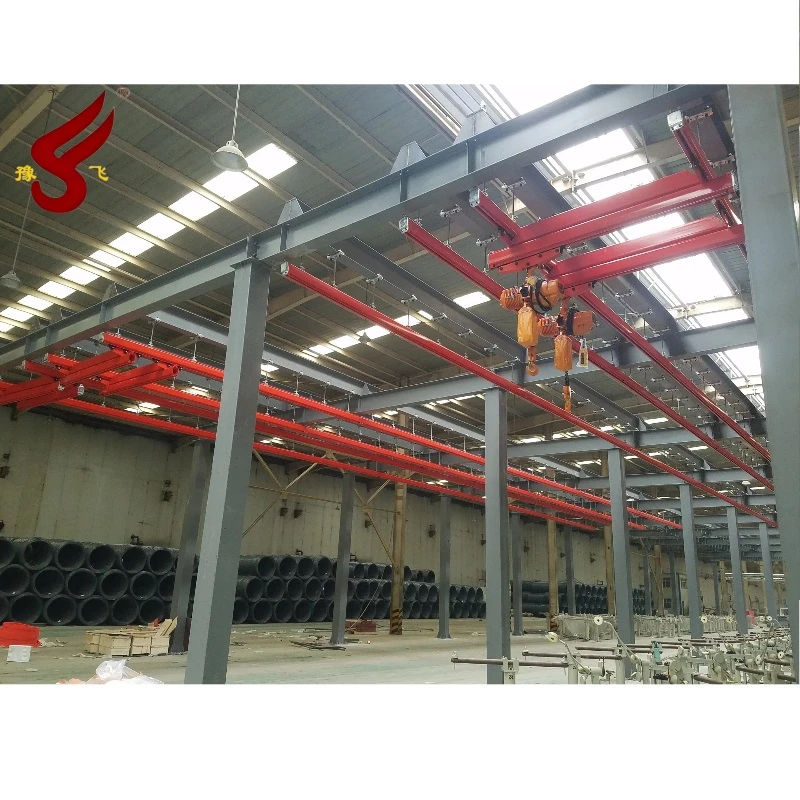
There are different types of light - duty cranes, each with its own unique features and applications. One popular type is the KBK Light - duty Crane. The KBK system is known for its modular design, which means it can be easily customized to fit the specific needs of a workspace. It consists of standardized components that can be assembled and disassembled quickly, making it a great option for temporary or changing work environments.
The KBK Light - duty Crane is highly flexible in terms of movement. It can move along a single track or multiple tracks, and it can also have different lifting mechanisms such as chain hoists or wire rope hoists. This type of crane is commonly used in small - scale manufacturing operations where precise movement of light loads is required.
Another type of light - duty crane is the Light - duty Gantry Crane. Gantry cranes are characterized by their bridge - like structure that runs on rails or wheels. Light - duty gantry cranes are often used in outdoor or indoor settings where there is a need to move loads across a relatively large area. They are typically more stable than some other types of light - duty cranes, and they can be used to lift loads at different heights.
Light - duty gantry cranes can be either portable or fixed. Portable gantry cranes are easy to move around, which makes them suitable for construction sites or maintenance work where the crane needs to be relocated frequently. Fixed gantry cranes, on the other hand, are more permanent installations and are often used in warehouses or factories where the lifting requirements are consistent.
When it comes to the construction and materials of light - duty cranes, they are usually made from lightweight yet strong materials. Steel is a common choice because it provides a good balance between strength and weight. Aluminum is also used in some cases, especially for cranes that need to be extremely lightweight and portable.

The control systems of light - duty cranes are designed to be user - friendly. Most light - duty cranes can be operated using a pendant control, which is a handheld device that allows the operator to control the movement of the crane, including lifting, lowering, and horizontal movement. Some modern light - duty cranes also come with remote control options, which provide even more convenience and safety for the operator.
In terms of safety, light - duty cranes are equipped with various safety features. These may include overload protection devices, which prevent the crane from lifting loads that exceed its rated capacity. There are also limit switches that stop the crane's movement when it reaches a certain position, preventing collisions or other accidents. Additionally, many light - duty cranes have emergency stop buttons that can be used to quickly halt the crane's operation in case of an emergency.
Now, if you're in the market for a light - duty crane, you might be wondering what to consider. First of all, you need to determine your load - lifting requirements. How much weight do you need to lift on a regular basis? This will help you choose a crane with the appropriate load capacity.
You also need to think about the workspace where the crane will be used. Is it a small indoor area or a large outdoor space? Do you need the crane to be portable or fixed? These factors will influence the type of light - duty crane that is best for you.
Another important consideration is the budget. Light - duty cranes come in a wide range of prices, depending on their features, capacity, and brand. It's important to find a crane that meets your needs without breaking the bank.
As a light - duty crane supplier, I'm here to help you make the right choice. I have extensive knowledge and experience in the industry, and I can provide you with detailed information about different types of light - duty cranes. Whether you're looking for a KBK Light - duty Crane or a Light - duty Gantry Crane, I can assist you in finding the perfect solution for your business.
If you're interested in learning more about our light - duty cranes or if you want to discuss your specific requirements, don't hesitate to reach out. We can have a detailed conversation about your needs, and I can provide you with a customized quote. Investing in the right light - duty crane can significantly improve the efficiency and productivity of your operations, so it's definitely worth taking the time to make an informed decision.
References:
- Crane Manufacturers Association of America (CMAA) standards
- Industry reports on light - duty crane usage and design