


Hey there! As a supplier of Container Spreaders, I'm super stoked to dive into the world of communication protocols that make these bad boys tick. Container spreaders are crucial in the shipping and logistics industry, and understanding their communication protocols is key to ensuring smooth operations.
First off, let's talk about why communication protocols matter. A container spreader needs to interact with various components, like the crane it's attached to, the control room, and even other equipment on the dock. These interactions are all about getting the right information at the right time to lift, move, and place containers safely and efficiently.
One of the most common communication protocols used in container spreaders is CAN (Controller Area Network). CAN is a serial communication protocol that's been around for a while, and it's known for its reliability and robustness. It's designed to work in harsh industrial environments, which is perfect for container spreaders that are exposed to the elements and heavy vibrations.
CAN allows different parts of the container spreader, such as the hydraulic systems, sensors, and actuators, to communicate with each other. For example, the sensors that detect the position of the spreader and the weight of the container can send their data over the CAN bus to the control unit. The control unit can then use this information to adjust the spreader's operation, like changing the lifting speed or the angle of the spreader.
Another important protocol is Ethernet. Ethernet is a high - speed communication protocol that's widely used in modern industrial applications. It offers much higher data transfer rates compared to CAN, which means it can handle large amounts of data quickly.
In a container spreader, Ethernet can be used for communication between the spreader and the crane's main control system. This allows for real - time monitoring and control of the spreader's functions. For instance, the control room can use Ethernet to send commands to the spreader, such as opening or closing the twist locks, and receive feedback on the spreader's status, like whether the twist locks are properly engaged or not.
Profibus is also a well - known communication protocol in the industrial world. It's a fieldbus protocol that enables fast and reliable communication between different devices in a network. In the context of a container spreader, Profibus can be used to connect the spreader's local control modules with the central control system.
This protocol is great for applications where there are a lot of distributed devices that need to communicate. For example, the various sensors and actuators located throughout the spreader can be connected via Profibus to the main control unit. This way, the control unit can easily manage and monitor all these devices, ensuring that the spreader operates smoothly.
Now, let's talk about the benefits of these communication protocols for container spreaders. Firstly, they improve safety. By allowing real - time communication between different components, the spreader can quickly detect any malfunctions or abnormal conditions. For example, if a sensor detects an over - load situation, it can immediately send a signal to the control unit, which can then take appropriate action, like stopping the lifting operation.
Secondly, these protocols enhance efficiency. With fast and reliable communication, the spreader can operate at optimal speed and accuracy. It can quickly respond to commands from the control room, reducing the time it takes to load and unload containers. This ultimately leads to higher productivity at the port.
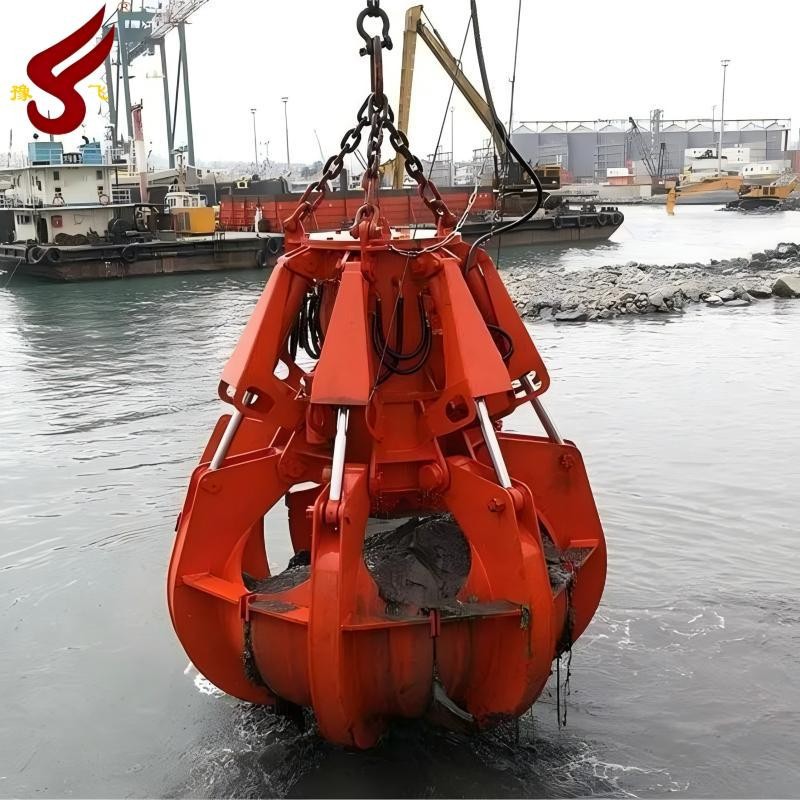
When it comes to the accessories of container spreaders, we have some great options. You can check out our Grab Bucket and Hook on our website. These accessories are designed to work seamlessly with our Container Spreader, enhancing its functionality and versatility.
If you're in the market for a container spreader or looking to upgrade your existing equipment, I highly recommend considering the communication protocols we've discussed. The right protocols can make a huge difference in the performance and reliability of your spreader.

We understand that every customer has unique needs, and we're here to help you find the best solution. Whether you need a spreader for a small - scale operation or a large - scale port, we have the expertise and the products to meet your requirements.
If you're interested in learning more about our container spreaders or have any questions regarding the communication protocols, feel free to reach out. We'd love to have a chat with you and discuss how we can work together to improve your operations.
In conclusion, communication protocols are the backbone of a container spreader's operation. They enable seamless interaction between different components, ensuring safety, efficiency, and productivity. As a leading supplier of container spreaders, we're committed to using the latest and most reliable communication protocols in our products to provide you with the best possible solution.
References
- "Industrial Communication Networks: Principles, Technologies, and Applications"
- "CAN Bus Handbook"
- "Ethernet in Industrial Automation"