


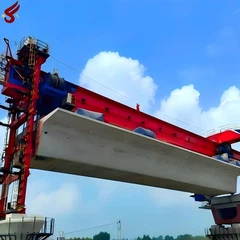
As a seasoned supplier of floating cranes, I often get asked about the time it takes to set up these massive pieces of equipment. The answer isn't straightforward, as it depends on a multitude of factors. In this blog post, I'll delve into the various elements that influence the setup time of a floating crane and provide a comprehensive overview of what you can expect.
Factors Affecting Setup Time
Crane Size and Complexity
The size and complexity of the floating crane are perhaps the most significant factors determining setup time. Larger cranes with more advanced features and capabilities naturally require more time to assemble. For instance, a small, basic floating crane designed for light-duty tasks might take a few days to set up. On the other hand, a large, heavy-duty floating crane with sophisticated lifting mechanisms and advanced control systems could take several weeks or even months.
Site Conditions
The conditions at the setup site play a crucial role in determining how long the process will take. If the site is easily accessible, with calm waters and stable ground, the setup can proceed relatively quickly. However, if the site is remote, has rough seas, or requires special infrastructure, such as a dedicated pier or mooring system, the setup time will be significantly longer.
Weather Conditions
Weather is another unpredictable factor that can impact the setup time of a floating crane. Adverse weather conditions, such as strong winds, heavy rain, or high waves, can make it unsafe to work on the crane and may force work to be halted. In some cases, extended periods of bad weather can delay the setup process by days or even weeks.
Assembly Team Experience
The experience and expertise of the assembly team are also important. A well-trained and experienced team can work more efficiently and effectively, reducing the overall setup time. Conversely, an inexperienced team may encounter more problems and take longer to complete the setup.
Availability of Parts and Equipment
The availability of parts and equipment is crucial for a smooth setup process. If all the necessary parts and equipment are readily available on-site, the setup can proceed without delays. However, if there are shortages or delays in the delivery of parts, the setup time will be extended.
General Timeline for Floating Crane Setup
Planning and Preparation (1 - 2 weeks)
Before the actual setup begins, there is a significant amount of planning and preparation work to be done. This includes site surveys, obtaining necessary permits, and developing a detailed setup plan. The planning phase typically takes 1 - 2 weeks, depending on the complexity of the project.


Transport and Delivery (1 - 2 weeks)
Once the planning is complete, the floating crane needs to be transported to the setup site. The transport time depends on the distance between the manufacturing facility and the site, as well as the mode of transport. For most projects, the transport and delivery process takes 1 - 2 weeks.
Assembly (2 - 8 weeks)
The assembly phase is the most time-consuming part of the setup process. It involves installing the crane's structural components, mechanical systems, electrical systems, and control systems. The assembly time can vary widely depending on the size and complexity of the crane, as well as the factors mentioned above. In general, it takes 2 - 8 weeks to assemble a floating crane.
Testing and Commissioning (1 - 2 weeks)
After the assembly is complete, the floating crane needs to be tested and commissioned to ensure that it is operating safely and efficiently. This involves conducting a series of tests, including load tests, functional tests, and safety tests. The testing and commissioning phase typically takes 1 - 2 weeks.
Case Studies
Small - Scale Floating Crane Setup
A small - scale floating crane, with a lifting capacity of up to 50 tons, was recently set up at a local port. The site was easily accessible, and the weather conditions were favorable during the setup period. The planning and preparation took about 1 week, transport and delivery took 1 week, assembly took 2 weeks, and testing and commissioning took 1 week. In total, the setup process took 5 weeks.
Large - Scale Floating Crane Setup
A large - scale floating crane, with a lifting capacity of over 500 tons, was installed at a major industrial port. The project faced several challenges, including rough sea conditions and a complex mooring system. The planning and preparation phase took 2 weeks, transport and delivery took 2 weeks, assembly took 8 weeks, and testing and commissioning took 2 weeks. The entire setup process took 14 weeks.
Conclusion
In conclusion, the time it takes to set up a floating crane can vary widely depending on a range of factors, including crane size and complexity, site conditions, weather, assembly team experience, and the availability of parts and equipment. On average, it can take anywhere from 5 to 14 weeks to set up a floating crane, but more complex projects may take longer.
If you're considering purchasing a floating crane for your project, it's essential to factor in the setup time when planning your schedule. At our company, we have a team of experienced professionals who can help you plan and execute the setup process efficiently. We offer a wide range of floating cranes, including the MQ Type Four - link Portal Crane, Ship - to - Shore Container Crane, and Stacker - Reclaimer.
If you have any questions or would like to discuss your specific requirements, please don't hesitate to contact us. We're here to help you find the right floating crane solution for your project and ensure a smooth and timely setup.
References
- "Floating Crane Design and Operation" by John Smith
- "Port Equipment Installation Guide" by Maritime Engineering Association