


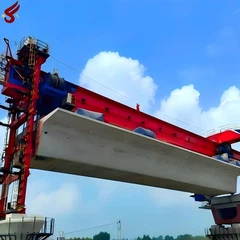
Hey there, construction enthusiasts! I'm [your name], and I work for a floating crane supplier. Today, I wanna chat about how floating cranes work hand in hand with other construction equipment. Floating cranes are like the heavy - lifters of the water, but they really shine when they team up with other tools on the job.


Let's kick things off by getting to know what floating cranes are all about. A floating crane is basically a crane mounted on a floating platform. It's super versatile and can be used in all sorts of water - based construction projects, like building bridges over rivers or ports out in the ocean. These cranes come in different sizes, from small ones that can handle a few tons to massive beasts that can lift hundreds of tons.
Now, one of the most common partners for a floating crane is the Stacker-Reclaimer. Stacker - reclaimers are used in ports and bulk material handling facilities. They're great at stacking materials like coal, ore, and grains in large piles and then reclaiming them when needed. When a floating crane is involved in a port construction project, it might be used to unload large pieces of equipment or building materials from ships. The stacker - reclaimer can then come in and handle the bulk materials that are being offloaded. For example, when new storage facilities are being built at a port, the floating crane can lift the pre - fabricated steel structures onto the foundation, and the stacker - reclaimer can move the building aggregates and other loose materials into place.
Another nifty piece of equipment that works well with floating cranes is the Continuous Ship Loader. As the name suggests, continuous ship loaders are designed to load bulk materials onto ships in a continuous and efficient manner. They're often used in conjunction with floating cranes during port expansion projects. The floating crane might be used to install the continuous ship loader on the dock. It can lift the heavy components of the loader, such as the conveyor booms and the loading hoppers, and place them precisely where they need to be. Once the continuous ship loader is in place, it can start loading the ships with the bulk materials that are stored in the port. This combination of a floating crane for installation and a continuous ship loader for loading makes the whole port operation much smoother.
The Ship-to-Shore Container Crane is yet another important player in the construction and operation of ports. These cranes are used to load and unload shipping containers from ships. When it comes to building a new port or upgrading an existing one, floating cranes can play a crucial role. They can be used to transport and install the ship - to - shore container cranes. These cranes are huge and heavy, and getting them into position is no easy feat. A floating crane can lift the container crane components, like the gantry and the trolley, off a transport ship and place them on the crane rails on the dock. This saves a lot of time and effort compared to using land - based cranes, especially in areas where the ground conditions are not ideal.
But it's not just about ports. Floating cranes also work well with other machinery in bridge construction. In bridge building over water, piling equipment is essential. Piling rigs are used to drive piles into the seabed or riverbed to provide a stable foundation for the bridge. A floating crane can assist the piling equipment by moving the piles from the storage area on the barge to the piling rig. It can also lift heavy accessories for the piling rig, like the hydraulic hammers. This cooperation ensures that the pile - driving process is efficient and that the piles are placed accurately.
Excavators are another type of equipment that often teams up with floating cranes. In dredging projects near ports or in waterways, excavators on barges are used to dig up sediment and debris. A floating crane can be used to move the excavator to different locations on the work site. It can also help in removing large objects that the excavator can't handle on its own, such as sunken ships or large rocks. This way, the dredging process can proceed smoothly and the waterway can be deepened or cleared more effectively.
In terms of communication and coordination between floating cranes and other construction equipment, it's all about teamwork. The operators of each piece of equipment need to be in constant contact. They use radio communication to share information about their positions, movements, and the tasks they're performing. For example, when a floating crane is lifting a heavy component for a continuous ship loader, the operator of the loader needs to know the exact time when the component will be delivered so that they can prepare the installation area.
Safety is also a top priority when these different pieces of equipment are working together. There are strict safety protocols in place to prevent accidents. For instance, there are clear no - go zones around each piece of equipment to avoid collisions. The operators are also trained to handle emergency situations, like a sudden change in weather conditions or a mechanical failure.
When it comes to maintenance, the combination of floating cranes and other equipment requires a well - organized plan. Each piece of machinery has its own maintenance schedule, and the maintenance team needs to ensure that all the equipment is in good working condition. For example, the floating crane needs regular inspections of its lifting mechanisms, while the continuous ship loader requires maintenance of its conveyor belts and loading mechanisms.
If you're involved in a construction project that requires the use of floating cranes and other related equipment, we're here to help. We've got a wide range of high - quality floating cranes that can be customized to meet your specific needs. Whether it's a port construction project, a bridge building over water, or a dredging operation, our floating cranes can work seamlessly with other construction equipment. So, if you're interested in learning more about our floating cranes or want to discuss how they can fit into your project, don't hesitate to reach out. We're always ready to have a chat and find the best solutions for you.
References
- Construction Equipment Handbook
- Port Construction and Operation Manual